Rosemary Monograph
Rosemary (Salvia rosmarinus) is more than a culinary herb—it’s a medicinal powerhouse with centuries of traditional use. This post explores its botany, history, and evidence-based benefits for memory, circulation, hair and skin health, digestion, and more. Discover Rosemary’s role in herbal medicine, its modern applications, and important safety considerations.
HERBAL MEDICINE
Annalisa Mazzarella, BCHN®, NBC-HWC
6/11/20229 min read
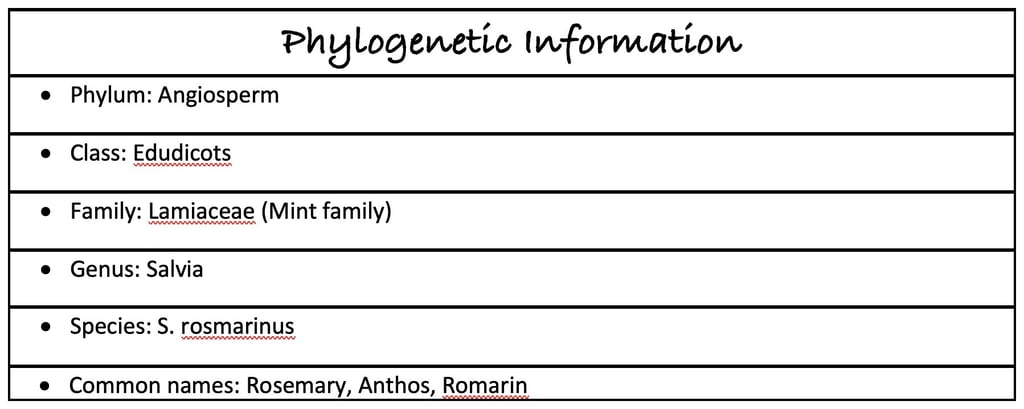
Botanical Information
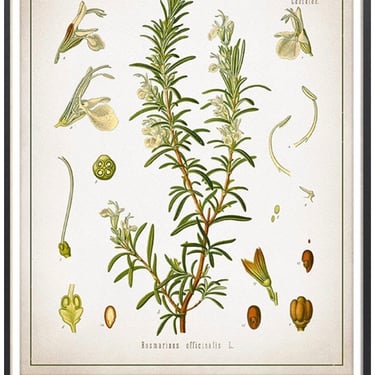
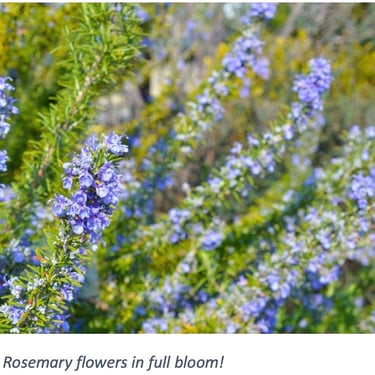
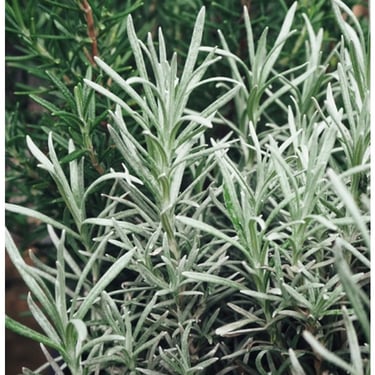
Rosemary (Rosmarinus officinalis) is a small evergreen shrub with thick, aromatic, linear leaves (1 inch long) that can grow up to 2 meters in height. The flowers are scattered in whorls on the upper stem. It is a member of the Lamiaceae (Mint) family native to the Mediterranean region and often found on rocky coastal cliffs. There are 3 main chemotypes in the genus Rosmarinus:
Camphor-borneol (Spain)
1,8-cineole (Tunisia)
Verbenone (France)
Higher altitudes will always produce a plant with up to 20% camphor, while Rosemary growing at sea level will produce very little to no camphor at all. Rosemary is widely cultivated in the United States, and the planting range has been extended beyond southern gardens thanks to the introduction of the hardier cultivars like R. officinalis“Arp,” which survives temperatures as low as -10° F. It is difficult to grow from seed and likes a light, well-drained, sandy, and loamy soil under sunny and airy conditions. [i]
[i] Salvatore Battaglia, “The complete Guide to Aromatherapy, Vol. 1, Foundation and Materia Medica,” 2018
Look-Alikes
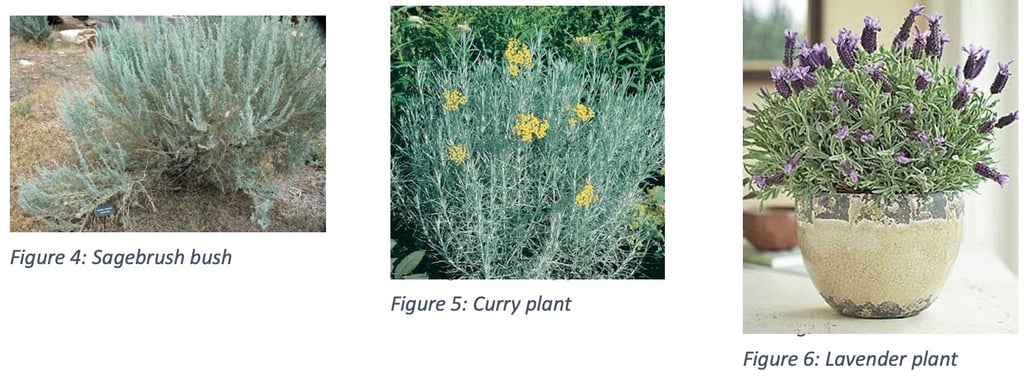
There are a few Rosemary look-alikes that might fool you if you plug your nose! Rosemary’s unmistakable piney aroma and bittersweet flavor has been a staple in herb and kitchen gardens for centuries. But if you just rely on “looks” you could misidentify the following highly aromatic herbs:
Sagebrush (Artemisia tridentata) - an aromatic shrub in the Asteraceae family that prefers the mountainous habitats of North America. It has multiple branches with needle-like, silvery grey foliage and yellow flowers, rich camphor terpenoids and volatile oils. The plant is drought tolerant and needs minimal watering once it’s established.
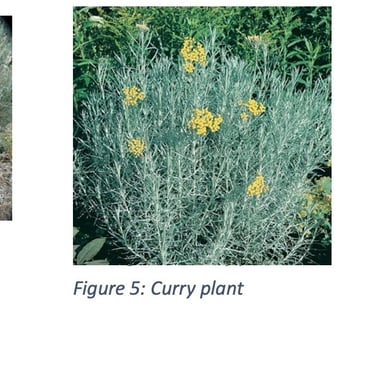
Curry Plant (Helichrysum italicum) – another aromatic shrub in the Asteraceae family native to the Mediterranean, growing on rocky, sandy ground. Their stems are typically woody at the base, with needle-like foliage and a cluster of yellow flowers in the summer that can grow to a height of 60 centimeters. Thrives in full sun or partial shade.
Lavender (Lavender angustifolia) – another highly aromatic perennial native to the Mediterranean that has spread to other parts of the world. A member of the Lamiaceae (mint) family, it is evergreen throughout the year in warm climates with its grey-green, needle-like foliage and whorled tiny flowers of various colors. [i]
Herbal information
Energetics: Warming, drying
Taste & Smell: Aromatic, pungent, spicy
Constituents: Essential oils (monoterpenes like pinene, camphene, myrcene, limonene, linalool; monoterpenones like camphor; oxides like 1,8 cineole; aliphatic ketones; sesquiterpenes; terpenoid esters; monoterpenols, borneol); minerals like iron, calcium, potassium, phosphorous, magnesium, and zinc; Vitamin B6; saponin, flavonoids, ursolic acid, oleanolic acid, rosmarinic acid, nicotinic acid, luteolin, carnosic acid, carnosol, betulinic acid, resins, tannins, B-carotene
Herbal actions: Anti-spasmodic, anti-inflammatory, anxiolytic, nervine, antidepressant, antioxidant, cognitive enhancer, astringent, diuretic, carminative, hepatoprotective, antibacterial, antidiabetic, emmenagogue, abortifacient, cholagogue, choleretic, and antinociceptive
Plant Part Used: Leaf
Medicinal Preparations: Culinary herb, tincture, infusion, massage oil, salve, or ointment
Tincture ratios and dosage: dry (1:5 40% or 1:3 45%); 2–4 ml (1 tsp = 5 ml), three times a day
Infusion ratios and dosage: 2-4 gr dried or fresh leaves, up to three times a day. For a stronger infusion, use 6-12 gr per day
Massage oil: 3% dilution rate in a carrier oil; 2% for daily use; can be combined with bees’ wax to make a salve. [i] [ii] [iii]
[i] Herbmentor, “Rosemary Monograph,” https://herbmentor.learningherbs.com/herb/rosemary
[ii] Peter Holmes, “The Energetics of Western Herbs: A Materia Medica Integrating Western & Chinese Herbl Therapeutics,” Vol. II, 2006
[iii] Dr. Sharon Tilgner, “Herbal ABC’s – The Foundation of Herbal Medicine,” 2018
Historical Traditions and Modern Use
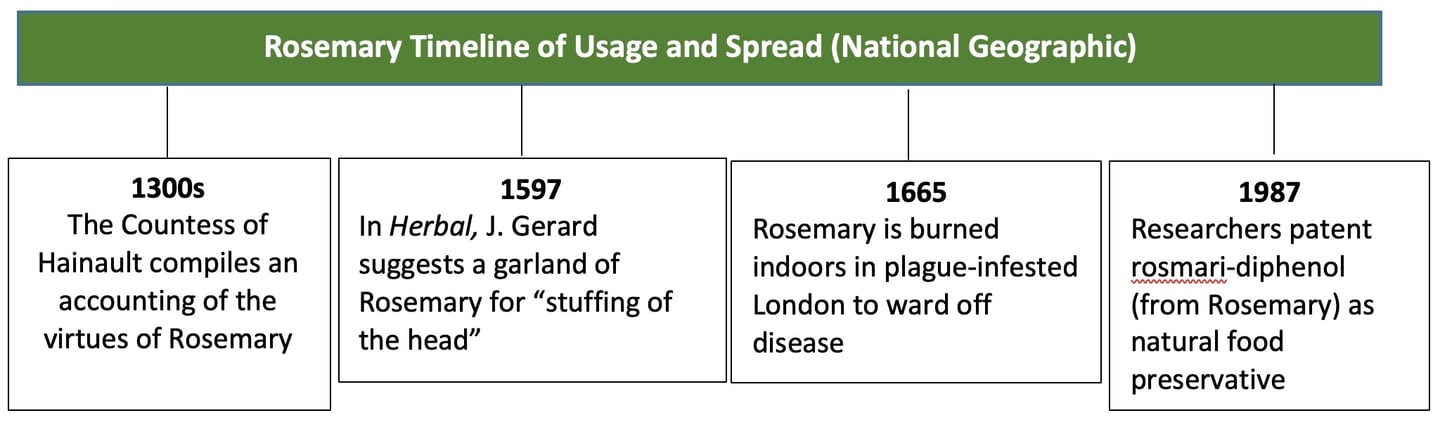
The name “Rosemary” derives from two Latin words: “Ros” which means “dew” and “Marinus” which means “sea,” referring to a plant that grows near the coast. Herbalist De la Floret says, “The common English name is sometimes associated with the Virgin Mary….[as] on her family’s flight to Egypt, a rosemary bush sheltered and protected them. When Mary laid her cloak upon the bush, the white flowers turned blue and thus became the “rose of Mary.”
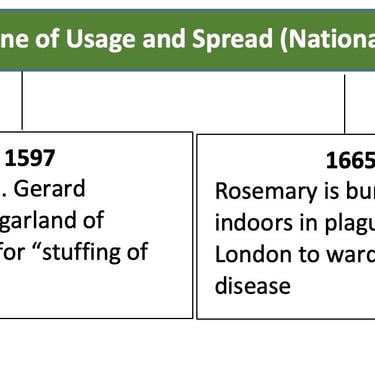
It has a long history of being used as an aromatic and medicinal herb. The Egyptians loved it and placed it in Pharos’ tombs starting with the first dynasty. The Greeks and Romans considered it a sacred plant symbolizing love and death. Greek philosopher Theophrastus and Greek physician Dioscorides recommended using it for stomach and liver problems. Greek physician Hippocrates recommended cooking Rosemary with vegetables to overcome liver and spleen disorders, while in the Roman Empire, physician Galen prescribed it for jaundice, and Pliny the Elder for improving eyesight. The ancients also used to burn it during religious ceremonies in place of more costly incense. It was also customary to burn it with juniper berries to prevent infections and purify the air.
Rosemary was also known to stimulate the mind and aid memory, and, as such, it became a symbol of remembrance and an emblem of fidelity for lovers – used at weddings, funerals, festivals, magic, and religious ceremonies. In Ancient Greece, students wore garlands of Rosemary in the belief it would improve their memory - a custom that survives to this day as students burn Rosemary the night before exams. In some European countries, mourners still toss this herb into graves at burial sites. Physician and herbalist Nicholas Culpeper (1618–1654) recommended the herb for treating diseases of the head and brain, drowsiness or dullness, loss of speech, lethargy, and epilepsy. It was also used to prepare Hungary Water to restore the vitality of paralyzed limbs, named after the Queen of Hungary who received this treatment, and effectively treat gout.
In traditional herbal medicine, Rosemary was regarded as a carminative and considered a very effective nervine against headaches. It was also used topically as Spiritus Rosmarini in hair lotions for its aroma, stimulating effect, and baldness prevention. The German Commission E recommends infusions of Rosemary leaf for dyspeptic complaints with a total daily dose of 4-6 g of the herb, while externally the essential oil can support therapies for rheumatic diseases and circulatory problems. [i] [ii] [iii] [iv]
[i] Johnson, Foster, Low Dog, Kiefer, “National Geographic Guide to Medicinal Herbs,” 2010
[ii] Salvatore Battaglia, “The complete Guide to Aromatherapy, Vol. 1, Foundation and Materia Medica,” 2018
[iii] Hoffman “Medical Herbalism – The Science and Practice of Herbal Medicine,” 2003
[iv] Herbmentor, “Rosemary Monograph,” https://herbmentor.learningherbs.com/herb/rosemary
To date, more than 500 studies have looked at Rosemary’s constituents to help treat or prevent a myriad of conditions. Some of these are:
Hair and Skin Care – Rosemary leaf produces extracts that are commonly used in hair and skin care products to help fight dandruff, a greasy scalp, and hair loss, promoting general healthy hair. In a randomized, double-blind study, researchers split 86 patients with hair loss (alopecia areata) into two groups: one group was given a blend of essential oils that included Rosemary to rub into the scalp; the other group was given a placebo - an oil without essential oils. After seven weeks, almost half of the people in the essential oil group showed improvement in hair growth, while only 6 percent showed improvement in the control group. Research also shows that Rosemary can reduce the risk of cancer from eating charred meats. Cooking meats at high temperatures, like deep-frying or grilling, creates compounds that have been shown to alter DNA and lead to cancer. In one study, when researchers added Rosemary extract to meats during cooking, they discovered the high antioxidant content (including carnosol and carnosic acid) helped prevent the formation of these carcinogenic compounds. This herb also has antiseptic and antibacterial properties useful to soothe different types of skin inflammation, including dermatitis, and even blocks harmful sunlight from damaging skin cells. [i] [ii] [iii]
Muscle and Joint Pain – Rosemary’s extract has also analgesic properties and can help relieve pain associated with rheumatoid arthritis, neuralgia, and sciatica, promoting circulation. Researchers published a study in the Phytotherapy Research Journal that showed a Rosemary extract reduced pain by up to 50% in people suffering from arthritis. De la Floret also notes this extract “..decreased their levels of C-reactive protein, which is a marker for systemic inflammation that leads to pain.” Similar results were observed in test animals in Mexico. [iv] [v]
Colds and flu – De la Floret recommends a warm infusion with Rosemary to help relieve stagnant congestion in the sinuses and lungs or a sore throat. [vi]
Memory and cognition – in addition to a longstanding tradition of folk remedies, several scientific studies show that smelling Rosemary can enhance thinking and memory, not only short-term but also as preventative action against cognitive diseases like Alzheimer’s. One study of 144 people, reported in the International Journal of Neuroscience, found that smelling Rosemary essential oil when performing mental tasks improved memory, while another showed a decrease in anxiety before a test.[vii] [viii]
Heart and blood circulation – Rosemary is “a tonic to vasomotor function (actions of nerves and muscles that cause a blood vessel to dilate or constrict) and peripheral circulation as well as soothing the nervous system.” Two studies in Japan found that adding Rosemary to the daily diet of test animals fed a high-fat diet improved blood flow through the carotid artery into the brain, thus decreasing blood clots and stroke. Dr. Tilgner adds, “old herbals talk about Rosemary gladdening the heart,” and indeed, Renaissance herbalist Wilhelm Ryff describes the effects of a Rosemary preparation as “The spirits of the heart and entire body feel joy from this drink, which dispels all despondency and worry.” Swiss medic and pastor Otto Brunfels succinctly described it as creating “pluck and courage.” Recent studies in mice support antidepressant properties. [ix] [x] [xi]
Digestion – because of its circulatory and carminative properties, Rosemary has a calming effect on digestion, “especially when stomach upset is accompanied by psychological tension” as in “flatulent dyspepsia with headache or depression associated with debility.”[xii] [xiii]
Blood sugar – According to a study published in the Journal of Ethnopharmacology, treatment with a Rosemary extract helped reduce blood sugar levels in both normal and diabetic rabbits. “The spice was just as effective as the diabetes drug glibenclamide (Glynase).” [xiv]
Liver support – According to a study published in Phytotherapy Research, Rosemary protected animals “exposed to the liver toxin carbon tetrachloride from the damage typical of cirrhosis of the liver. Researchers in Mexico also found that daily doses of the herb “improved the structural integrity of liver cells in mice and protected them from liver damage, despite repeated exposure to toxic substances.[xv]
In Traditional Chinese Medicine, Rosemary is used to balance a “heart and kidney Yang deficiency” to “warm the interior,” stimulating the heart, blood circulation, dispelling colds, and relieving debility. It is also used to “warm the exterior” to open up the sinuses and dispel cold-damp conditions. Similar properties apply to the digestive system, promoting bile flow and urination as well as resolving toxicosis. The herb is also seen in formulas for various hepatic conditions whenever cold and stagnation are present. In addition, Rosemary is considered an herb that tonifies the Qi, promoting menstruation, relieving impotence or frigidity, generating mental strength, and promoting tissue repairs. Holmes recommends drinking a hot infusion as a stimulant diaphoretic when experiencing wind-cold conditions, such as cold headaches. Dosage would range from 6 to 12 g daily. [xvi]
[i] Puangsombat, Kanithaporn, and J. Scott Smith. “Inhibition of Heterocyclic Amine Formation in Beef Patties by Ethanolic Extracts of Rosemary.” Journal of Food Science 75, no. 2 (2010): T40–47. doi:10.1111/j.1750-3841.2009.01491.x.
[ii] Dr. Bharat Aggarwal, “Healing Spices,” 2011
[iii] Hay, I. C., M. Jamieson, and A. D. Ormerod. “Randomized Trial of Aromatherapy: Successful Treatment for Alopecia Areata.” Archives of Dermatology 134, no. 11 (1998): 1349–52. doi:10.1001 /archderm.134.11.1349.
[iv] Lukaczer, Daniel, et al. “A Pilot Trial Evaluating meta050, a Proprietary Combination of Reduced Iso-Alpha Acids, Rosemary Extract and Oleanolic Acid in Patients with Arthritis and Fibromyalgia.” Phytotherapy Research 19, no. 10 (2005): 864–69. doi:10.1002/ptr.1709
[v] Dr. Bharat Aggarwal, “Healing Spices,” 2011
[vi] Herbmentor, “Rosemary Monograph,” https://herbmentor.learningherbs.com/herb/rosemary
[vii] Ibid
[viii] Dr. Bharat Aggarwal, “Healing Spices,” 2011
[ix] Ibid
[x] Dr. Sharon Tilgner, “Herbal ABC’s – The Foundation of Herbal Medicine,” 2018
[xi] Peter Holmes, “The Energetics of Western Herbs: A Materia Medica Integrating Western & Chinese Herbal Therapeutics,” Vol. II, 2006
[xii] Hoffman “Medical Herbalism – The Science and Practice of Herbal Medicine,” 2003
[xiii] Michael Tierra, “the Way of Herbs,” 1998
[xiv] Dr. Bharat Aggarwal, “Healing Spices,” 2011
[xv] Ibid
[xvi] Peter Holmes, “The Energetics of Western Herbs: A Materia Medica Integrating Western & Chinese Herbal Therapeutics,” Vol. II, 2006
Recipes
If you love grilling meats like me, Rosemary is going to be a wonderful ally! Just add it to your usual marinades and enjoy.
Brain-boost and relaxing combo – I love drinking an infusion of Rosemary, Lemon Balm, Gotu Kola, and Holy Basil to leverage the cognitive, adaptogen, and mild nervine superpowers of all these herbs. Just mix equal parts of the dried herbs, following the dosage recommendations above.
Tincture for depression and “fuzzy thinking” – Dr. Stansbury recommends combining in equal parts tinctures of Rosemary, Bacopa, Ginseng, Licorice, and Artic rose and take 1-2 dropperfuls at least 3 times a day for several months.
Scalp and body massage oil – Holmes recommends mixing Rosemary, Yarrow, and Peppermint essential oils in a carrier oil at 3% dilution rate for overall hair and scalp health.
Joint Care oil – Aromatherapist Andrea Butje recommends diluting 9 drops each of Cardamom, Rosemary ct. camphor, Geranium, and Peppermint essential oils in 2 oz of Arnica Oil to sooth joint pain. [1] [2] [3]
Precautions and Contraindications
There are no known contraindications, drug or supplement interactions when the herb is used as a spice for cooking, which require much lower doses compared to therapeutic purposes. However, absorption of nonheme iron may be impacted if a phenolic-rich extract of Rosemary is ingested. Animal studies have shown Rosemary reduced serum glucose levels in both healthy and diabetic animals, therefore those who take insulin or oral hypoglycemic drugs should monitor glucose levels when taking Rosemary extracts. Although information on the safety of Rosemary during pregnancy and breastfeeding is conflicting, it is recommended to avoid using therapeutic doses of the herb – extracts and the essential oil – although use of the herb as cooking spice is fine. [4]
[1] Ibid
[2] Dr. Jill Stannsbury, “Herbal Formularies for Health Professionals, Vol 4,”2020
[3] Andrea butje, “The Heart of Aromatherapy,” 2017
[4] AHPA “Botanical Safety Handbook,” 2nd Edition, 2013
"If you truly love nature, you will find beauty everywhere"— Vincent Van Gogh
Contact us:
info@wildwoodsherbals.com
© 2025. All rights reserved.
My post content


