PMOS (formerly PCOS): An Integrative, Whole‑Person Approach
What is Polyendocrine Metabolic Ovarian Syndrome (PMOS)? Formerly called Polycystic Ovary Syndrome (PCOS), PMOS is a lifelong endocrine-metabolic condition that affects much more than fertility. Learn what the name change means and discover evidence-informed strategies to support your hormonal, metabolic, and overall health.
HEALTH & WELLNESS
Annalisa Mazzarella, BCHN®, NBC‑HWC
8/6/202611 min read
What is PMOS?
Polyendocrine Metabolic Ovarian Syndrome (PMOS), formerly known as Polycystic Ovary Syndrome (PCOS), is one of the most common and most misunderstood endocrine disorders affecting women of reproductive age. Although the name has changed, the condition itself has not. Indeed, the new terminology reflects decades of research demonstrating that this is a lifelong, multisystem disorder involving endocrine, metabolic, reproductive, dermatologic, psychological, and cardiometabolic health—not simply the ovaries.
In 2026, an international expert consensus recommended replacing the term PCOS with PMOS because the previous name was biologically misleading. The term polycystic ovary syndrome implies that ovarian cysts define the condition. More importantly, the old name focused attention on the ovaries while underemphasizing the broader hormonal and metabolic disturbances that characterize the disorder.
Despite the new name, the diagnostic criteria remain essentially unchanged. What has changed is how clinicians are encouraged to think about the condition. Instead of ending the evaluation once menstrual irregularity or ovarian morphology is identified, the diagnosis should immediately expand to include assessment of metabolic health, cardiovascular risk, sleep, psychological well-being, fertility, and quality of life.
PMOS is a complex endocrine‑metabolic disorder characterized by a combination of:
Irregular or absent ovulation
Hyperandrogenism (clinical or biochemical signs of excess androgens)
Polycystic ovarian morphology on ultrasound. In adults, anti-Müllerian hormone (AMH) may now be used as an alternative to ultrasound for defining polycystic ovarian morphology in appropriate clinical situations. However, AMH should not be used as a stand-alone diagnostic test or for diagnosing adolescents.
Several professional organizations define PMOS slightly differently:
NIH (1990): Hyperandrogenism + chronic anovulation
Rotterdam Criteria (2003): Any two of the three features above
AE‑PCOS Society (2009): Hyperandrogenism + ovarian dysfunction
PMOS affects an estimated 5–26% of women worldwide, depending on the diagnostic criteria used. It occurs in both lean and higher‑BMI individuals and is frequently underdiagnosed. In the United States alone, the annual cost of diagnosing and treating PMOS is estimated at $3.7 billion, reflecting not only reproductive care but also long‑term metabolic and cardiovascular complications.
Prevalence and Public Health Impact
PMOS Phenotypes: Why One Size Does Not Fit All
PMOS is not a single presentation. Four phenotypes (A–D) are recognized based on which diagnostic features are present. Phenotype A—the most severe—includes hyperandrogenism, anovulation, and polycystic ovaries.
Understanding phenotype matters because:
Risk profiles differ (e.g., metabolic vs reproductive dominance)
Symptoms can shift over time
Health strategies should be individualized
The previous name, therefore, contributed to several common misconceptions:
The "cysts" seen on ultrasound are immature follicles, not true ovarian cysts.
Many women believed they had an ovarian cyst disease rather than a complex endocrine-metabolic disorder.
Clinical care often focused primarily on fertility and menstrual irregularities while overlooking metabolic health.
Long-term risks, including type 2 diabetes, cardiovascular disease, liver disease, sleep disorders, and psychological health, were frequently underrecognized.
The term Polyendocrine Metabolic Ovarian Syndrome better reflects what researchers now understand: PMOS is a complex condition involving interconnected endocrine, metabolic, reproductive, and inflammatory pathways that affect the entire body and require a comprehensive, lifelong approach to care.
This article is adapted from my doctoral presentation and clinical talking points and is designed to help readers better understand what PMOS is, why it develops, and how an integrative, evidence-informed approach can support long-term health and quality of life.
Diagnosing PMOS Across the Lifespan
PMOS can't be confirmed by any one blood test or imaging study. Therefore, its diagnosis is nuanced. For adults, the "old" classic criteria continue to apply and must exclude other disorders that may mimic PMOS, such as thyroid disease, hyperprolactinemia, non-classic congenital adrenal hyperplasia, Cushing syndrome, and androgen-secreting tumors.
For adolescents, irregular menstrual periods and acne are part of normal puberty, but could be misinterpreted as PMOS. To avoid a premature diagnosis, current international recommendations prefer that teens meet both persistent ovulatory dysfunction and clinical or biochemical hyperandrogenism. In addition, ovarian ultrasound or anti-Müllerian hormone (AMH) testing is not recommended since normal pubertal development can resemble PMOS. Teens with suggestive features who do not yet meet full diagnostic criteria should always be monitored over time and reassessed as they mature.
For adults, AMH may now be used as an alternative to ultrasound for defining polycystic ovarian morphology when appropriate. However, AMH should never be used as a stand-alone diagnostic test and is unnecessary when both irregular ovulation and hyperandrogenism are already present.
The goal is not simply to establish the diagnosis but to identify each individual's reproductive, metabolic, cardiovascular, and psychological risks so that care can be personalized from the very beginning.


Symptoms and Clinical Features
PMOS extends far beyond menstrual irregularities. Common features include:
Irregular or absent periods
Infertility
Acne, hirsutism, and scalp hair thinning
Weight gain and insulin resistance
Anxiety, depression, and reduced quality of life
As PMOS is now widely recognized as a chronic metabolic condition, not simply a gynecologic disorder with long-term risks, women with PMOS face increased risk of:
Type 2 diabetes and metabolic syndrome
Gestational diabetes and pregnancy complications
Cardiovascular disease
Metabolically associated fatty liver disease (MASLD)
Endometrial hyperplasia and cancer
Sleep apnea and mental health challenges
A central driver of these risks is the self‑perpetuating cycle of insulin resistance, androgen excess, and visceral adiposity. Therefore, clinicians are encouraged to screen not only reproductive health but also blood pressure, glycemic status, lipid profile, sleep apnea, depression and anxiety, eating disorder risk, pregnancy planning, and quality of life.
Hormonal Physiology: What Goes Wrong in PMOS?
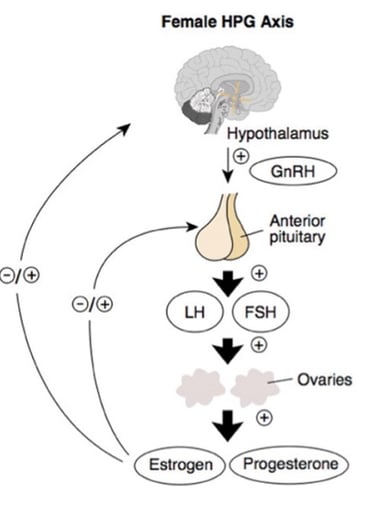
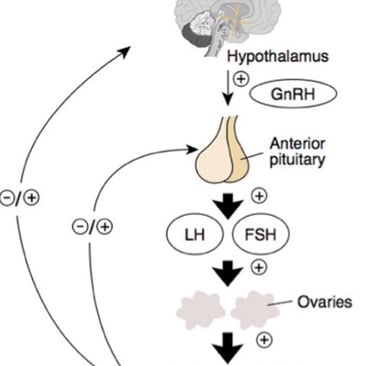
In a healthy hypothalamic–pituitary–ovarian (HPO) axis, the hypothalamus releases gonadotropin-releasing hormone (GnRH) in a balanced, rhythmic pattern that stimulates the pituitary to secrete luteinizing hormone (LH) and follicle-stimulating hormone (FSH) in appropriate proportions. FSH supports ovarian follicle maturation, while a mid-cycle surge of LH triggers ovulation. Estrogen and progesterone then provide negative feedback to the hypothalamus and pituitary, helping regulate hormone production and maintain regular menstrual cycles.
In PMOS, this finely tuned system becomes dysregulated. Rapid GnRH pulsatility leads to disproportionately high LH and relatively low FSH levels, which stimulate excessive ovarian androgen production while impairing proper follicle development. As a result, follicles fail to mature, and ovulation does not occur. At the same time, insulin resistance reduces levels of sex hormone–binding globulin (SHBG), increasing the amount of free, biologically active androgens in circulation. These androgens are further converted to estrone in adipose tissue, creating abnormal feedback signals that perpetuate LH dominance. Together, these mechanisms drive the hallmark features of PMOS: persistent hyperandrogenism, chronic anovulation, and ongoing metabolic stress.
Pathophysiologic Triggers
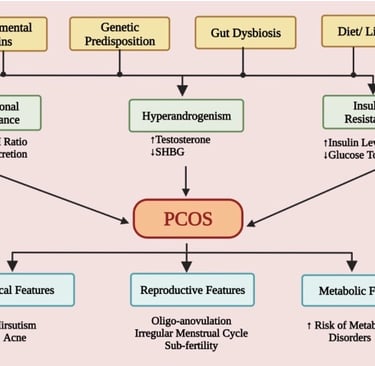
PMOS does not have a single cause. Instead, it arises from a convergence of genetic susceptibility and environmental influences that interact across the lifespan. Research suggests that genetic variants affecting insulin signaling, steroid hormone production, and inflammatory pathways can predispose some individuals to PMOS. These genetic tendencies may be amplified by epigenetic changes, particularly those occurring in utero or early in life, which can alter gene expression without changing the DNA itself. Prenatal exposure to excess androgens or environmental toxins may prime the body for hormonal dysregulation years before symptoms appear.
Diet and lifestyle factors play a central role in whether this predisposition becomes clinically expressed. Diets high in refined carbohydrates, added sugars, and ultra-processed foods promote insulin resistance and chronic inflammation—two key drivers of PMOS. Central (abdominal) adiposity further worsens insulin signaling and increases ovarian and adrenal androgen production. Importantly, even modest, sustainable lifestyle changes—such as a 5–10% reduction in body weight for those who are overweight or obese—have been shown to improve menstrual regularity, ovulation, and metabolic markers.
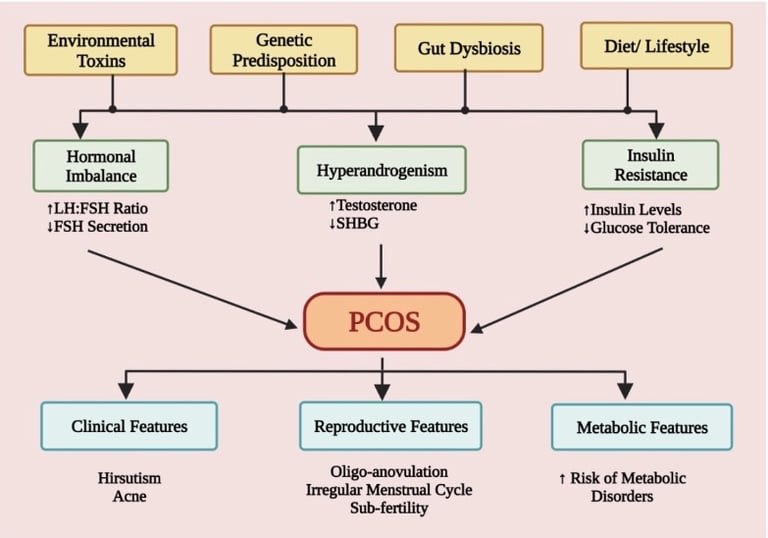
Emerging research also highlights the role of the gut microbiome in PMOS. Women with PMOS often exhibit reduced levels of beneficial bacteria such as Lactobacillus and Bifidobacterium, alongside increased gut permeability. This imbalance may allow inflammatory compounds such as lipopolysaccharides (LPS) to enter the circulation, contributing to systemic inflammation, insulin resistance, and androgen excess. Environmental exposures further compound this burden. Air pollution, cigarette smoke, and endocrine-disrupting chemicals—including BPA, PFAS, and phthalates—have all been associated with hormonal disruption and increased PCOS risk, with some evidence suggesting transgenerational effects.
Conventional management of PMOS typically focuses on regulating menstrual cycles, reducing androgen-related symptoms, supporting fertility, and mitigating long-term metabolic risks. Diagnosis often includes blood work to assess LH, FSH, and androgens, as well as metabolic markers, and ultrasound imaging when indicated. Equally important is ruling out other endocrine conditions such as thyroid dysfunction, hyperprolactinemia, or adrenal disorders.
Pharmacologic treatment options may include oral contraceptives to regulate cycles, metformin or inositols to improve insulin sensitivity, anti-androgens for acne or hirsutism, and ovulation-inducing medications for fertility support. While these interventions can be helpful, they often manage symptoms rather than address upstream drivers. Lifestyle modification—nutrition, movement, and weight management when appropriate—remains the cornerstone of care and consistently shows the most substantial long-term benefits.
It is also essential to consider drug–nutrient interactions. For example, long-term metformin use may deplete vitamin B12, while oral contraceptives can lower folate, B6, magnesium, and zinc. Without nutritional monitoring, these imbalances may quietly worsen fatigue, mood symptoms, or metabolic health over time.
Integrative Care: Addressing Root Causes
An integrative approach to PMOS expands the focus beyond symptom suppression to restoring metabolic and hormonal balance at the root. Evidence increasingly supports multimodal interventions that combine nutrition, targeted supplementation, botanical medicine, physical activity, stress regulation, and sleep support. Together, these strategies reduce insulin resistance, inflammation, and oxidative stress while improving hormonal signaling.
Diet is one of the most powerful tools available. Dietary patterns such as the Mediterranean, DASH, and low-glycemic diets have consistently demonstrated improvements in insulin sensitivity, androgen levels, and menstrual regularity. These approaches emphasize whole foods, fiber-rich vegetables, high-quality proteins, healthy fats, and minimal refined carbohydrates—supporting both metabolic health and hormonal regulation.
Targeted nutraceuticals may also play a supportive role when used individually, under the guidance of a professional. Myo- and D-chiro-inositol support ovarian function and insulin signaling, while omega-3 fatty acids and antioxidants help reduce chronic inflammation. Vitamin D has been associated with improved ovulation and reduced androgen synthesis, and minerals such as chromium may enhance insulin receptor sensitivity. Quality, dosing, and safety monitoring are critical, particularly for long-term use.
Botanical medicine offers additional support when used appropriately. For example, berberine-containing herbs activate AMPK pathways similar to metformin; cinnamon improves insulin sensitivity; turmeric reduces inflammatory signaling; and Vitex supports dopaminergic regulation of prolactin. Licorice root (not deglycyrrhinized) has been shown to have androgen-lowering effects. At the same time, other herbs, such as fennel, white peony, sage, black cohosh, and vitex (among others) have been traditionally used to support hormonal and cycle balance. Botanical interventions should always be personalized, quality-controlled, monitored, and assessed for potential herb–drug interactions.
Lifestyle Foundations: Movement, Stress, and Sleep
Physical activity improves insulin sensitivity, reduces inflammation, and supports ovulatory function. Research supports a combination of moderate-intensity aerobic exercise and resistance training, with a goal of at least 150 minutes per week. Even small increases in daily physical activity can yield significant metabolic benefits, particularly for individuals transitioning from a sedentary lifestyle.
Stress management is equally critical. Chronic stress exacerbates HPA-axis dysregulation and insulin resistance, thereby amplifying hormonal imbalances. Mind-body practices, including yoga, meditation, journaling, acupuncture, and mindfulness-based stress reduction, have been shown to benefit metabolic markers, mood, and perceived health. Cognitive-behavioral strategies and coaching support can further help address body image concerns, anxiety, and long-term adherence.
Sleep is often overlooked, yet it has a profound influence on hormonal regulation. Poor sleep disrupts the signaling of leptin, ghrelin, and cortisol, leading to increased appetite and insulin resistance. Supporting sleep hygiene—consistent schedules, reduced screen time, and calming evening routines—can significantly enhance overall treatment outcomes.
Equally important, lifestyle recommendations should be individualized, realistic, and free of weight stigma. While excess adiposity can worsen insulin resistance and hormonal imbalances in many individuals, PMOS also occurs in people with a healthy body weight. The goal is not simply weight loss, but improving metabolic health, hormonal balance, quality of life, and long-term disease prevention through sustainable, patient-centered lifestyle changes.
Conventional Care: What It Addresses—and What It Misses
Bringing It All Together
Effective PMOS care is not about a single intervention; it is about integration, recognizing that it is a lifelong endocrine-metabolic condition that affects multiple organ systems. Nutrition, movement, sleep, stress management, appropriate medical therapy, and individualized integrative care work together to reduce long-term metabolic and reproductive risk. For clients, health coaching can help translate knowledge into action by supporting SMART goals, accountability, and long-term behavior change. The transition from PCOS to PMOS represents more than a change in terminology. It reflects a shift toward whole-person, preventive care that addresses the multifaceted nature of this condition throughout your lifespan.
REFERENCES
Abdolahian, S., Tehrani, F. R., Amiri, M., Ghodsi, D., Yarandi, R. B., Jafari, M., Majd, H. A., & Nahidi, F. (2020). Effect of lifestyle modifications on anthropometric, clinical, and biochemical parameters in adolescent girls with polycystic ovary syndrome: A systematic review and meta-analysis. BMC Endocrine Disorders, 20(1), 71. https://doi.org/10.1186/s12902-020-00552-1
Abdulla, M. L., Shathir, A. N., Anwaru, S., Ahmed, A. S., Ismail, F. I., Shabin, A., & Ali, S. (2024). Emerging infertility biothreat and gynecological pandemic polycystic ovary syndrome (PCOS): Molecular biogenesis with emphasis on treatment. Pharmacophore, 15(2), 7–15. https://doi.org/10.51847/smn018b4hw
Azziz, R., Carmina, E., Dewailly, D., Diamanti-Kandarakis, E., Escobar-Morreale, H. F., Futterweit, W., Janssen, O. E., Legro, R. S., Norman, R. J., Taylor, A. E., Witchel, S. F., & Task Force on the Phenotype of the Polycystic Ovary Syndrome of the Androgen Excess and PCOS Society. (2009). The Androgen Excess and PCOS Society criteria for the polycystic ovary syndrome: The complete task force report. Fertility and Sterility, 91(2), 456–488. https://doi.org/10.1016/j.fertnstert.2008.06.035
Dema, H., Videtič Paska, A., Kouter, K., Katrašnik, M., Jensterle, M., Janež, A., Oblak, A., Škodlar, B., & Bon, J. (2023). Effects of mindfulness-based therapy on clinical symptoms and DNA methylation in patients with polycystic ovary syndrome and high metabolic risk. Current Issues in Molecular Biology, 45(4), 2717–2737. https://doi.org/10.3390/cimb45040178
Di Lorenzo, M., Cacciapuoti, N., Lonardo, M. S., Nasti, G., Gautiero, C., Belfiore, A., Guida, B., & Chiurazzi, M. (2023). Pathophysiology and nutritional approaches in polycystic ovary syndrome (PCOS): A comprehensive review. Current Nutrition Reports, 12(3), 527–544. https://doi.org/10.1007/s13668-023-00479-8
Gautam, R., Maan, P., Jyoti, A., Kumar, A., Malhotra, N., & Arora, T. (2025). The role of lifestyle interventions in PCOS management: A systematic review. Nutrients, 17(2), 310. https://doi.org/10.3390/nu17020310
Hafizi Moori, M., Nosratabadi, S., Yazdi, N., Kasraei, R., Abbasi Senjedary, Z., & Hatami, R. (2023). The effect of exercise on inflammatory markers in women with polycystic ovary syndrome: A systematic review and meta-analysis of randomized trials. International Journal of Clinical Practice. https://doi.org/10.1155/2023/3924018
Khatlani, K., Njike, V., & Costales, V. C. (2019). Effect of lifestyle intervention on cardiometabolic risk factors in overweight and obese women with polycystic ovary syndrome: A systematic review and meta-analysis. Metabolic Syndrome and Related Disorders, 17(10), 473–485. https://doi.org/10.1089/met.2019.0049
Kim, K. W. (2021). Unraveling polycystic ovary syndrome and its comorbidities. Journal of Obesity & Metabolic Syndrome, 30(3), 209–221. https://doi.org/10.7570/jomes21043
Menichini, D., Ughetti, C., Monari, F., Di Vinci, P. L., Neri, I., & Facchinetti, F. (2022). Nutraceuticals and polycystic ovary syndrome: A systematic review of the literature. Gynecological Endocrinology, 38(8), 623–631. https://doi.org/10.1080/09513590.2022.2089106
Moslehi, N., Zeraattalab-Motlagh, S., Rahimi Sakak, F., Shab-Bidar, S., Tehrani, F. R., & Mirmiran, P. (2023). Effects of nutrition on metabolic and endocrine outcomes in women with polycystic ovary syndrome: An umbrella review of meta-analyses of randomized controlled trials. Nutrition Reviews, 81(5), 555–577. https://doi.org/10.1093/nutrit/nuac075
Muhammed Saeed, A. A., Noreen, S., Awlqadr, F. H., Farooq, M. I., Qadeer, M., Rai, N., Farag, H. A., & Saeed, M. N. (2025). Nutritional and herbal interventions for polycystic ovary syndrome (PCOS): A comprehensive review of dietary approaches, macronutrient impact, and herbal medicine in management. Journal of Health, Population, and Nutrition, 44(1), 143. https://doi.org/10.1186/s41043-025-00899-y
Riestenberg, C., Jagasia, A., Markovic, D., Buyalos, R. P., & Azziz, R. (2022). Health care–related economic burden of polycystic ovary syndrome in the United States: Pregnancy-related and long-term health consequences. The Journal of Clinical Endocrinology & Metabolism, 107(2), 575–585. https://doi.org/10.1210/clinem/dgab613
Sarris, J., & Wardle, J. (2019). Clinical naturopathy: An evidence-based guide to practice (3rd ed.). Elsevier.
Sengupta, P., & Dutta, S. (2026). A practical guide on polyendocrine metabolic ovarian syndrome (PMOS) for clinicians. Journal of Integrated Science and Technology, 14(7), 1610. https://doi.org/10.62110/sciencein.jist.2026.v14.1610
Singh, S., Pal, N., Shubham, S., Sarma, D. K., Verma, V., Marotta, F., & Kumar, M. (2023). Polycystic ovary syndrome: Etiology, current management, and future therapeutics. Journal of Clinical Medicine, 12(4), 1454. https://doi.org/10.3390/jcm12041454
Stansbury, J. (2019). Herbal formularies for health professionals: Volume 3, Endocrinology. Chelsea Green Publishing.
Teede, H. J., Tay, C. T., Laven, J. J. E., Dokras, A., Moran, L. J., Piltonen, T. T., Costello, M. F., Boivin, J., Redman, L. M., Boyle, J. A., Norman, R. J., Mousa, A., Joham, A. E., & International PCOS Network. (2023). Recommendations from the 2023 international evidence-based guideline for the assessment and management of polycystic ovary syndrome. European Journal of Endocrinology, 189(2), G43–G64. https://doi.org/10.1093/ejendo/lvad096
"If you truly love nature, you will find beauty everywhere"— Vincent Van Gogh
Contact us:
info@wildwoodsherbals.com
© 2025. All rights reserved.
My post content


