Balancing Hormones, Lifting Mood: How Estrogen and Testosterone Influence Mental Health
Discover how estrogen and testosterone affect mood, energy, and mental clarity—and how nutrition, herbal medicine, lifestyle, and aromatherapy can naturally restore hormonal balance.
HEALTH & WELLNESS
Annalisa Mazzarella, BCHN®, NBC-HWC
10/7/20256 min read
My post content
the mind-body connection
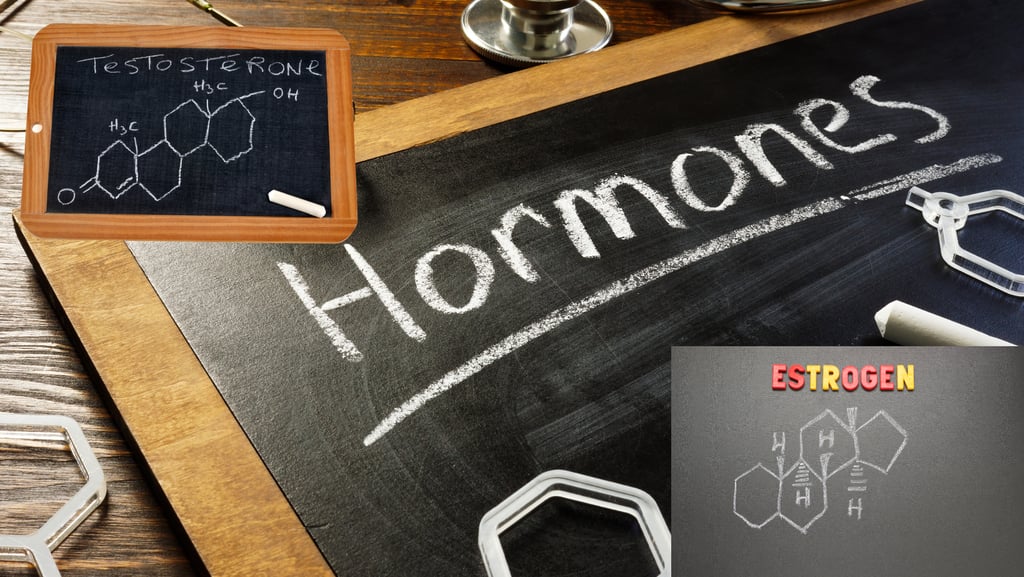
Hormones are messengers that do far more than regulate reproduction. Estrogen and testosterone influence how we think, feel, and respond to the world around us. When these hormones fluctuate—whether from stress, aging, or lifestyle—our mood and mental clarity often follow.
Understanding their effects empowers you to support emotional well-being through balanced nutrition, mindful living, and nature’s botanical allies.
Estrogen: The Brain’s Protector and Mood Stabilizer
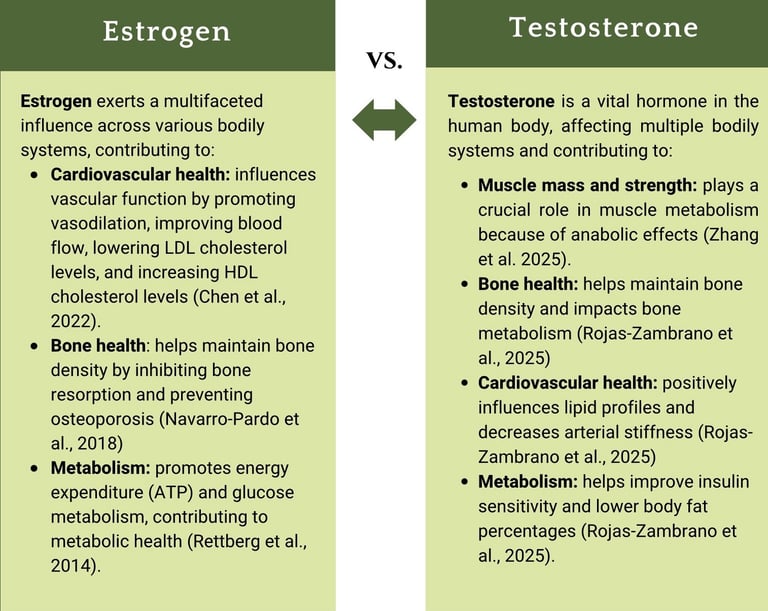
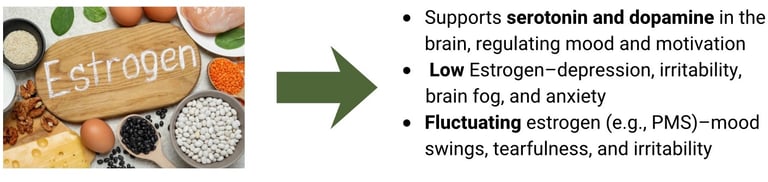
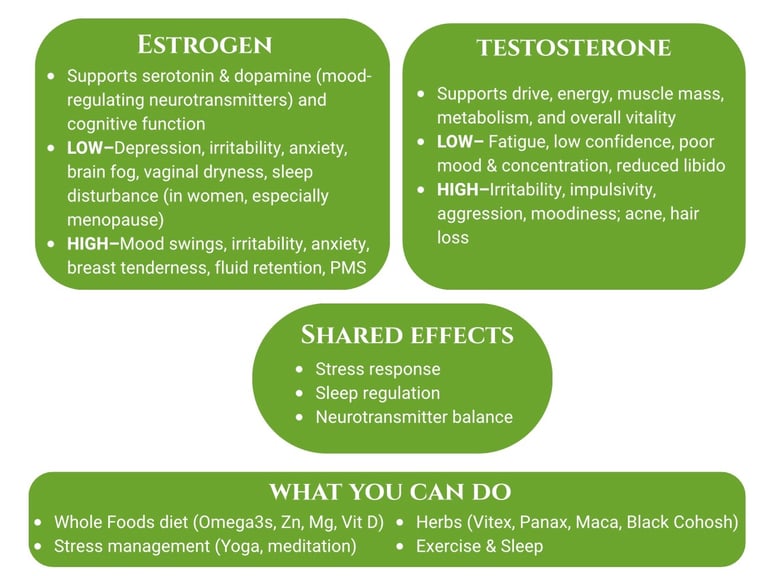
Estrogen plays an essential role in mood, cognition, and overall vitality. Research shows it supports:
Brain function: Estrogen helps maintain synaptic flexibility and glucose metabolism in the brain—critical for learning, focus, and memory.¹
Mood regulation: It supports serotonin and dopamine pathways, promoting calmness and motivation. When levels drop (as during menopause or PMS), many experience irritability, anxiety, or brain fog.²
Cardiovascular and bone health: Beyond mood, estrogen promotes vascular elasticity and maintains bone density—part of why hormonal balance feels like stability throughout the body.³
Testosterone: Drive, Focus, and Emotional Strength
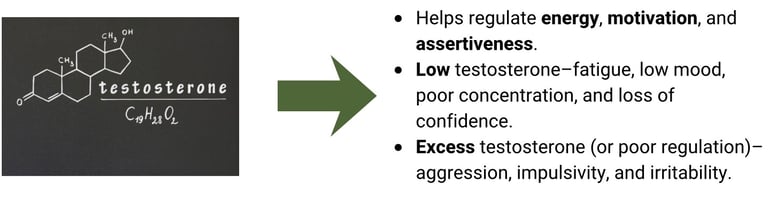
Though known for its role in male physiology, testosterone is essential for everyone. Balanced levels support:
Confidence and motivation: Low testosterone can manifest as fatigue, apathy, or low mood.
Cognitive and emotional resilience: Studies suggest optimal levels improve mood and overall life satisfaction.
Metabolic and cardiovascular health: Healthy testosterone contributes to muscle tone, energy metabolism, and circulation—key foundations for emotional steadiness.⁴
When testosterone dips or surges, mood swings, irritability, and even impulsivity can follow. Finding balance is less about boosting hormones and more about supporting the systems that regulate them.
Nutrition That Nurtures Hormonal Harmony
Whole foods provide the building blocks for neurotransmitters and hormones. A few essentials:
Healthy fats: Omega-3s, found in sources such as flax, chia, walnuts, and wild fish, help reduce inflammation and nourish brain tissue.
Protein: Balanced intake stabilizes blood sugar and supports serotonin and dopamine synthesis.
Micronutrients:
Magnesium calms the nervous system and eases PMS-related tension.
Zinc & B vitamins aid hormone metabolism and neurotransmitter production.
Vitamin D supports testosterone and mood regulation.
Vitamin E provides antioxidant protection and may help alleviate premenstrual mood symptoms.
Overall, a whole foods diet emphasizes vegetables, fruits, whole grains, legumes, nuts, and seeds. Avoid ultra-processed foods and refined sugars, as they can disrupt insulin and hormone balance. Whenever possible, choose organic produce and pasture-raised proteins to minimize exposure to endocrine-disrupting chemicals. The Environmental Working Group offers excellent consumer guides!
Herbal Allies for Estrogen and Testosterone Balance
Botanicals can gently modulate hormone pathways without overstimulating them.
For estrogen balance:
For women: Vitex agnus-castus (Chaste tree) may improve PMS-related mood swings, menopausal symptoms, and support progesterone; Actaea racemosa (Black cohosh) helps regulate estrogen activity and alleviate menopausal symptoms; Trifolium pratense (Red clover) offers mild phytoestrogens that may reduce hot flashes, menstrual cramps, and other menopausal symptoms.⁵
For men: Lepidium meyenii (Maca) may support libido and help modulate estrogen-testosterone balance; Passiflora incarnata (Chrysin, a flavonoid component) has been studied for aromatase-inhibiting effects, helping to maintain a higher testosterone-to-estrogen ratio in men; Ocimum sanctum (Tulsi) may reduce stress-driven cortisol that indirectly influences estrogen metabolism; Urtica dioica (Nettle root) supports healthy estrogen and testosterone metabolism by modulating sex-hormone-binding globulin (SHBG) binding.⁸
For testosterone support:
Lepidium meyenii (Maca) may enhance mood and libido by regulating the HPA axis.
Panax ginseng promotes vitality and mental focus.
Urtica dioica (Nettle root) supports healthy hormone metabolism by influencing SHBG.
Trigonella foenum-graecum (Fenugreek) and Tribulus terrestris may boost testosterone synthesis and libido in men (but with inconsistent results).
Glycyrrhiza glabra (Licorice root)–may reduce excess testosterone in women.⁸
These traditional botanicals have long been used to support hormonal equilibrium—and this is now backed by modern phytotherapy research⁷ and clinical naturopathic practice guidelines.⁸
Lifestyle and Mind–Body Practices
Hormonal health thrives on rhythm, rest, and self-regulation.
Movement: Exercise supports insulin sensitivity, boosts testosterone levels, and improves mood through the release of endorphins.
Stress reduction: Meditation, yoga, and breathing practices help lower cortisol—the stress hormone that disrupts both estrogen and testosterone levels.
Sleep: Deep, consistent sleep allows hormonal repair and neurotransmitter synthesis.
Connection: Social interaction and community foster the release of oxytocin and promote emotional resilience.
These foundational approaches are consistently supported in integrative and naturopathic literature for balancing endocrine and nervous-system function.⁸
Aromatherapy for Hormone Balance and Emotional Well-Being
Our sense of smell is wired directly to the limbic system—the brain’s emotional and hormonal control center. Essential oils can quickly influence mood, stress response, and even the neuroendocrine pathways that regulate estrogen and testosterone.
Calming Cortisol and Emotional Tension
Oils such as Lavender (Lavandula angustifolia), Sweet Orange (Citrus sinensis), and Frankincense (Boswellia carterii) activate the parasympathetic nervous system, reducing heart rate and cortisol levels.⁶
Clinical aromatherapy research shows that such blends improve anxiety and sleep, supporting natural hormonal restoration.⁷
Lifting Mood and Restoring Joy
Bergamot (Citrus bergamia) has been shown to have mood-brightening and anxiolytic effects, influencing the serotonin and GABA pathways.⁸
Rose (Rosa damascena) and Jasmine (Jasminum officinale) help increase oxytocin and emotional openness—ideal for PMS or menopause.⁹
Clary Sage (Salvia sclarea) contains natural phytoestrogen-like compounds that ease menstrual tension and promote equilibrium.¹⁰
Balancing Energy and Focus
For fatigue or low motivation, stimulating yet centering oils such as Rosemary (Rosmarinus officinalis), Sweet Basil (Ocimum basilicum), and Ginger (Zingiber officinale) offer gentle adrenal support and cognitive clarity.¹¹
Simple Blends to Try:
Mood & Motivation Diffuser: 2 drops Bergamot + 2 drops Rosemary + 1 drop Frankincense
Menstrual Comfort Massage Oil: 2 drops Clary Sage + 2 drops Lavender + 1 drop Rose in 1 oz Jojoba
Grounding Blend: 2 drops Vetiver + 2 drops Cedarwood + 1 drop Sweet Orange
Use aromatherapy with awareness—start with gentle inhalation or diffusion, and always dilute essential oils properly for topical use.
Bringing It All Together
Hormones and mood are in constant dialogue. When you nourish your body with wholesome foods, herbs, rest, and aromatic self-care, you create the conditions for both balance and resilience.
If your mood feels low, your energy wavers, or going through a natural transition phase, listen to what your body is trying to tell you—your hormones may be asking for a little TLC.
DISCLAIMER: The information provided in this blog is for educational purposes only and is not intended to diagnose, treat, cure, or prevent any disease; these statements have not been evaluated by the Food and Drug Administration. Please consult a licensed healthcare specialist for specific medical advice.
references
Hara Y. et al. (2015). Estrogen effects on cognitive and synaptic health over the lifecourse. Physiological Reviews,95(3), 785–807. https://doi.org/10.1152/physrev.00036.2014
Navarro-Pardo E. et al. (2018). Sex hormones and healthy psychological aging in women. Frontiers in Aging Neuroscience, 9. https://doi.org/10.3389/fnagi.2017.00439
Chen P., Li B., & Ouyang L. (2022). Role of estrogen receptors in health and disease. Frontiers in Endocrinology,13. https://doi.org/10.3389/fendo.2022.839005
Rettberg J. R., Yao J., & Brinton R. D. (2014). Estrogen: a master regulator of bioenergetic systems in the brain and body. Frontiers in Neuroendocrinology, 35(1), 8–30. https://doi.org/10.1016/j.yfrne.2013.08.001
Marchant I. et al. (2022). Estrogen, cognitive performance, and functional imaging studies: what are we missing about neuroprotection? Frontiers in Cellular Neuroscience, 16. https://doi.org/10.3389/fncel.2022.866122
Rojas-Zambrano J. G. et al. (2025). Benefits of testosterone hormone in the human body: a systematic review. Cureus. https://doi.org/10.7759/cureus.78785
Kendal M., Glavač N. K., Nagy M., Sollner Dolenc M., & on behalf of the OEMONOM (2021). Herbal products used in menopause and for gynecological disorders. Molecules, 26(24), 7421. https://doi.org/10.3390/molecules26247421
Sarris J., & Wardle J. (2019). Clinical Naturopathy: An Evidence-Based Guide to Practice (3rd ed.). Elsevier.
Buckle J. (2015). Clinical Aromatherapy: Essential Oils in Healthcare (3rd ed.). Elsevier.
Rhind J. P. (2020). Essential Oils: A Comprehensive Handbook for Aromatic Therapy (3rd ed.). Singing Dragon.
"If you truly love nature, you will find beauty everywhere"— Vincent Van Gogh
Contact us:
info@wildwoodsherbals.com
© 2025. All rights reserved.
My post content


